Porcelain Crowns Explained: When a Filling Is Not Enough to Save Your Tooth

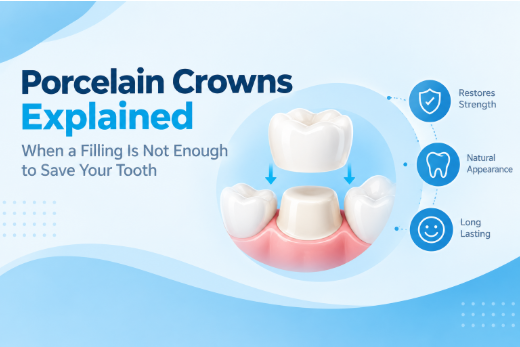
Most people hear the word crown and imagine something dramatic. In reality, a crown is one of the most common ways a dentist saves a tooth that has lost too much of its structure. A large cavity, a crack, or years of heavy chewing can leave a tooth too weak for a simple filling. When that happens, a crown acts like a protective cap that restores strength, shape, and appearance. Knowing when you need one can help you act before a small problem turns into a lost tooth.
What a Porcelain Crown Actually Does
A crown is a custom-made cap that covers the entire visible part of a tooth above the gum line. Unlike a filling, which patches a small area, a porcelain crown surrounds the whole tooth and holds it together. Porcelain is popular because it can be matched closely to the color of your natural teeth, so it blends in with your smile.
Patients who want a plan that covers health, function, and appearance together often look for a practice that offers comprehensive dental care, where one team can diagnose the problem and then restore the tooth.
Signs a Filling May Not Be Enough
A filling works well when most of the tooth is intact. A crown becomes the better choice when the damage goes further. Common reasons include:
- A large cavity that leaves little healthy tooth behind
- A cracked or chipped tooth that could split further
- A tooth weakened by a previous root canal
- A worn tooth that has lost height from grinding or age
- A filling that is very large and keeps breaking down
If you notice pain when biting or sensitivity that keeps returning, it may be a sign the tooth needs more than a patch. Our guide on why tooth pain comes and go explains what recurring discomfort can mean and when to see a dentist.
How the Crown Process Works
The process is usually simple and well organized. First, the dentist examines the tooth and takes X-rays to check the roots and surrounding bone. Next, the tooth is gently reshaped so the crown fits properly, and an impression or digital scan is taken. A temporary crown protects the tooth while the final one is made. At the final visit, the dentist checks the fit, bite, and color before bonding it into place.
To learn more about the treatment we offer, visit our porcelain crowns page.
Why Waiting Can Cost More
A weakened tooth rarely gets better on its own. A small crack can spread below the gum line, and decay can reach the nerve, which may lead to a root canal or extraction. Treating the tooth early often means a simpler, more conservative fix. Putting off a check can make treatment longer and more involved, so a prompt visit is usually the wiser path.
Caring for Your Crown
A crown does not decay, but the tooth underneath still can. Good habits keep it lasting:
- Brush twice a day and floss around the crown daily
- Avoid chewing ice, hard candy, or opening packages with your teeth
- Wear a night guard if you grind your teeth
- Keep up regular checkups and cleanings
Questions to Ask Before Getting a Crown
- Is a crown the best option, or could a smaller treatment work?
- How long can I expect it to last with good care?
- Will the color match my other teeth?
- What does the whole process look like from start to finish?
- What are the costs and payment options?
Conclusion
A crown is not a sign that something has gone badly wrong. It is a smart way to protect a tooth that needs more support than a filling can give. Acting early keeps more of your natural tooth, saves time, and avoids bigger treatment later.
If you are unsure about a tooth that hurts, looks cracked, or feels weak, book a consultation at Yogi Dental Center and let a dentist tell you what it needs.
Located at 30 Scotland Road, Orange, NJ 07050. Call us at (973) 673-1311 to schedule your visit.